
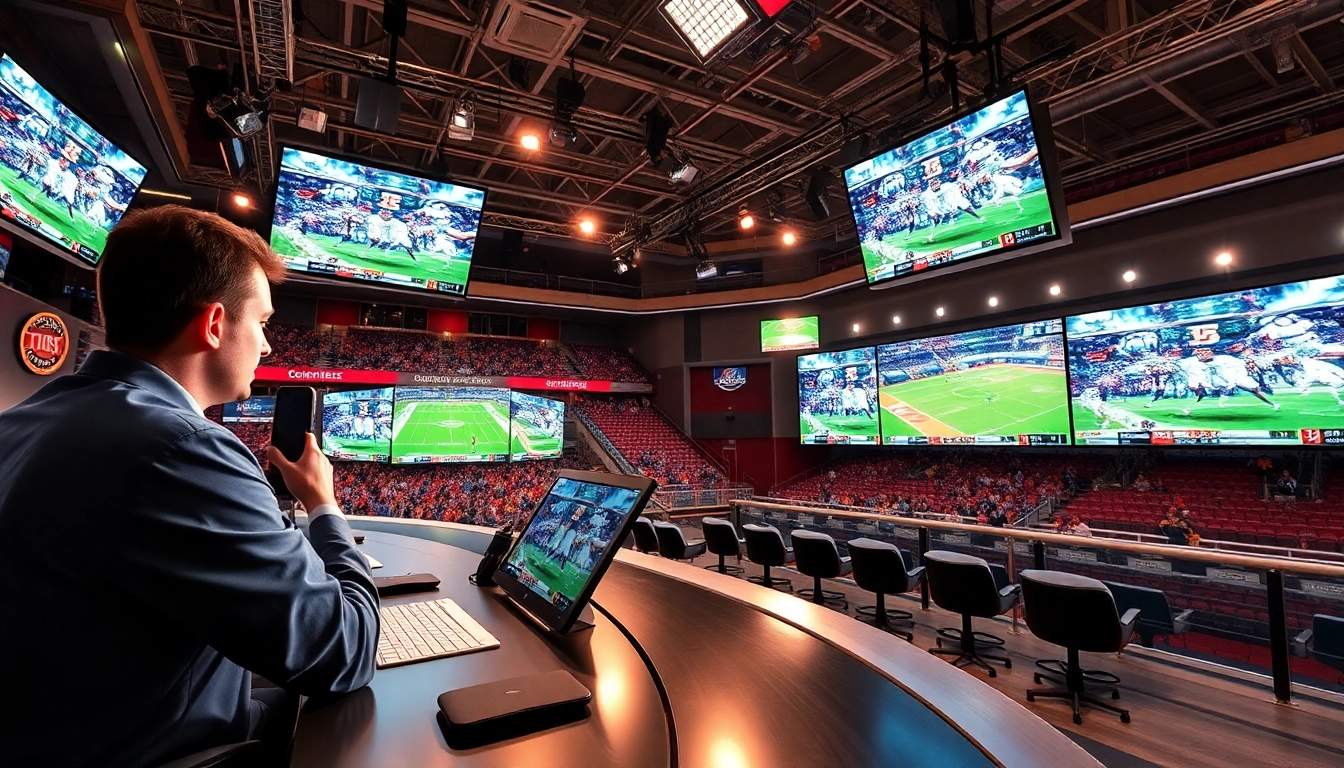
Understanding the Foundation of Sports Broadcasting
Sports broadcasting has evolved into a multifaceted industry that significantly shapes the way fans engage with their favorite sports. To grasp the complexities of this sector, it is essential to understand its historical development, the key players involved, and the contrasting types of broadcasts available today. One of the foundational aspects of this field can be uncovered through its history and evolution, how it has adapted to changes in technology and audience preferences. From traditional radio broadcasts to cutting-edge digital platforms, the landscape of Sports Broadcasting continues to evolve.
The Historical Development of Sports Broadcasting
The origins of sports broadcasting can be traced back to the early 20th century when radio gained popularity. The first live sports broadcast was a boxing match in 1921, paving the way for decades of innovation. Throughout the 1930s and 1940s, the advent of television offered a new way for audiences to consume sports, culminating in large-scale broadcasts of significant events like the NFL Championship and the World Series. By the 1980s, cable television exploded, providing sports leagues and networks like ESPN the platform to broadcast games continuously, reaching millions of viewers.
Key Players in the Sports Broadcasting Arena
The landscape of sports broadcasting is governed by a mix of traditional media companies, sports networks, and digital platforms. Major broadcasters often negotiate exclusive rights with leagues, ensuring they can offer unique content. Among these players, production teams, commentators, and analytics experts play vital roles in delivering high-quality broadcasts. Additionally, rising tech companies increasingly influence how content is distributed and consumed, promoting a competitive atmosphere that encourages innovation.
Types of Sports Broadcasting: Traditional vs. Digital
Sports broadcasts can be categorized broadly into traditional and digital formats. Traditional broadcasting includes live television and radio broadcasts, supported by advertising and subscriptions. Digital broadcasting, however, encompasses streaming services that allow viewers to watch sports on-demand or live via the internet. This shift has led to a more tailored experience for fans, offering flexibility and convenience previously unavailable to traditional viewers.
Current Trends in Sports Broadcasting
Shift Towards Streaming Services
In recent years, there has been a notable shift towards streaming services among sports audiences. Viewers increasingly prefer to consume content via platforms that allow them to watch whenever and wherever they want. This trend can be attributed to the convenience of mobile devices and high-speed internet. As a result, traditional broadcasters are exploring partnerships with streaming services to retain audiences, while new players enter the scene with innovative offerings.
Interactive Viewing Experiences for Audiences
Interactive viewing experiences are transforming how fans engage with sports. Features like real-time statistics, multiple camera angles, and interactive polls enhance viewer involvement. Platforms are experimenting with augmented reality (AR) and virtual reality (VR) to create immersive experiences, allowing fans to feel like they are part of the action. This level of engagement fosters a deeper connection between viewers and their teams, leading to increased loyalty and participation.
The Role of Social Media in Sports Broadcasting
Social media platforms play a pivotal role in sports broadcasting today, driving engagement through shares, comments, and live updates. Broadcasters leverage social media to reach wider audiences, create buzz around events, and provide real-time highlights. Fans discuss plays, analyze game strategies, and share their experiences, transforming sports broadcasts into communal events that extend beyond traditional viewing. The integration of social media functionalities into broadcasts enhances fan interaction and keeps audiences engaged throughout games.
Technological Innovations Impacting Sports Broadcasting
High-Definition and 4K Technology Utilization
As technology advances, high-definition and 4K viewing options have become a standard expectation among sports fans. These technologies offer stunning visuals that enhance the viewing experience, making fans feel as though they are experiencing the game live. Networks invest in top-tier cameras and production equipment to deliver superior quality broadcasts, setting a benchmark for viewer expectations and encouraging further innovation in the space.
Virtual and Augmented Reality in Sports Experiences
Virtual reality (VR) and augmented reality (AR) are gaining traction in sports broadcasting, providing fans with unique ways to experience games. These technologies allow fans to engage with the action in immersive ways, such as by "attending" games from the comfort of their homes. AR applications overlay real-time data onto broadcasts, presenting statistics and play-by-play information in engaging formats, thus enhancing the overall viewer experience.
Data Analytics and Its Application in Sports Broadcasting
Data analytics is redefining how sports broadcasts are produced and consumed. Broadcasters analyze viewer behavior, preferences, and engagement metrics to tailor content and advertisement strategies. Furthermore, data enhances commentary by providing commentators with real-time insights into player performances and game dynamics, creating a richer narrative for viewers. Analytics tools help networks optimize their broadcasts, ensuring they meet audience expectations and remain competitive.
Challenges Facing the Sports Broadcasting Industry
Dealing with Copyrights and Licensing Issues
Copyrights and licensing issues remain prevalent challenges in sports broadcasting, particularly as technologies evolve. Securing broadcast rights can be complex and costly, leading to disputes and restrictions that affect availability. Broadcasters must navigate intricate legal landscapes and negotiate with leagues to ensure the rights to air events. Successful broadcasting relies on understanding these complexities and formulating strategies that align with legal requirements while maximizing viewer access.
Adapting to Changing Audience Preferences
As audience preferences shift towards more flexible and interactive experiences, sports broadcasters face the challenge of adapting their offerings. Platforms that previously thrived on linear scheduling now find themselves in a race to create on-demand content and interactive features that resonate with modern viewers. Broadcasters must continually assess audience feedback and behaviors, tailoring their products to retain viewer interest without losing the essence of live sports.
The Competitive Landscape of Sports Broadcasting
The competitive landscape in sports broadcasting is becoming increasingly crowded, with numerous players vying for viewer attention. Streaming services, traditional networks, and emerging platforms continuously innovate to capture market share. Broadcasters need to understand market dynamics, differentiate their offerings, and deliver compelling content to stand out. Creating exclusive partnerships, experimenting with unique commentary styles, and engaging viewers through social media can provide the competitive edge needed to thrive in this landscape.
The Future of Sports Broadcasting
Anticipated Developments in Broadcasting Technologies
The future of sports broadcasting is poised for transformative developments driven by technological advancements. Expect future broadcasts to integrate artificial intelligence (AI) for personalized viewer recommendations and enhanced commentary. Additionally, the continued evolution of VR and AR will lead to increasingly immersive and interactive viewing experiences. The rise of 5G technology promises seamless streaming capabilities, ensuring that audiences around the globe can enjoy high-quality broadcasts without lag.
Building a More Engaged Audience
Building a more engaged audience will be paramount for broadcasters looking to thrive in the future. Creatively utilizing social media, interactive features, and community-building initiatives are essential strategies to cultivate a dedicated fanbase. Personalized content delivery, based on viewer interests and behaviors, will further enhance engagement, fostering deeper connections between fans and the sports they love.
Long-term Sustainability in Sports Broadcasting
Long-term sustainability in sports broadcasting will depend on adaptability and innovation. Broadcasters that prioritize ethical practices, equitable access, and audience inclusivity will secure a loyal fanbase. Additionally, leveraging green technologies and sustainable practices in production can enhance corporate responsibility while positively impacting brand perception among audiences. The focus should be on evolving with the industry while maintaining core values that resonate with fans.
Frequently Asked Questions
What are the main types of sports broadcasting?
Sports broadcasting can be categorized into traditional (television and radio) and digital formats, including streaming services and on-demand platforms.
How has technology changed sports broadcasting?
Technology has enhanced sports broadcasting through HD and 4K visuals, interactive features, and data analytics, improving viewer experiences.
Why is social media important for sports broadcasting?
Social media enhances fan engagement and interaction, providing real-time updates and fostering community discussions about games and events.
What challenges do broadcasters face regarding copyright?
Broadcasters navigate complex copyright and licensing issues, ensuring they secure rights to air events while complying with legal regulations.
What does the future hold for sports broadcasting?
The future includes advancements like AI, VR, and 5G technology, leading to more personalized, interactive, and immersive viewing experiences.