





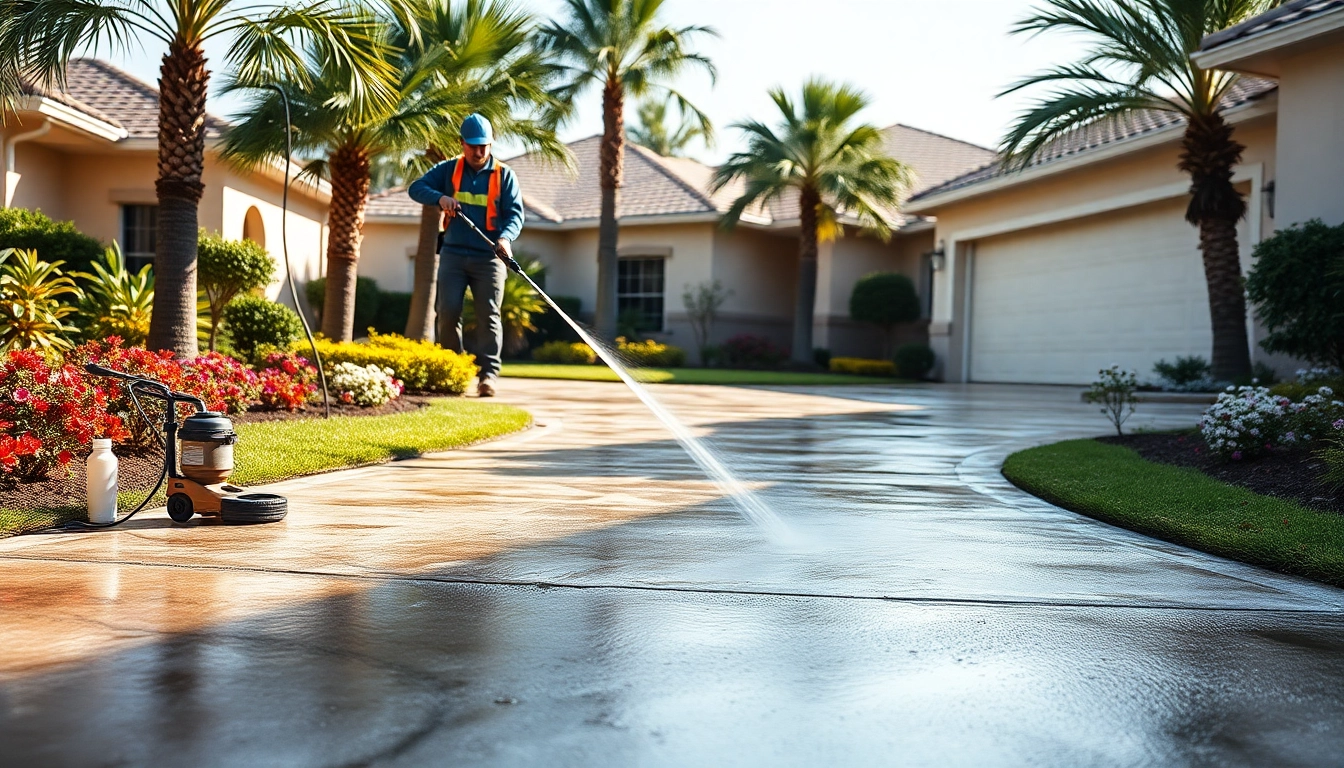
Understanding Driveway Pressure Washing
In Kissimmee and the broader Orlando area, maintaining the cleanliness and safety of your driveway is vital for both aesthetics and functionality. A professional Driveway pressure wash offers an effective solution to remove dirt, grime, oil stains, and other contaminants that can accumulate over time. This process not only revitalizes the appearance of your driveway but can also extend its lifespan, making it a smart investment for homeowners and businesses alike.
What is Driveway Pressure Wash?
Driveway pressure washing involves using high-pressured water jets to eliminate dirt, mold, algae, and various stains from a driveway surface. This service typically utilizes specialized equipment that can produce varying levels of pressure, allowing for effective cleaning without damaging the underlying materials. Whether it’s concrete, pavers, or asphalt, driveway pressure washing can restore the original look and feel of the surface.
Benefits of Driveway Pressure Washing
- Enhanced Curb Appeal: A clean driveway instantly improves the overall aesthetic of your property, making it more welcoming.
- Prevention of Damage: Regular cleaning helps prevent the build-up of harmful substances that can degrade the surface over time.
- Safety: Eliminating slippery mold and algae can reduce the risk of accidents caused by slips and falls.
- Increased Property Value: A well-maintained driveway adds value to your home and can impress potential buyers.
Common Driveway Materials and Their Cleaning Needs
Understanding the material of your driveway is crucial for determining the appropriate cleaning method:
- Concrete: Typically durable, concrete can withstand high-pressure washing. However, care must be taken to avoid damaging any cracks.
- Pavers: While pavers are aesthetically pleasing, they require gentle cleaning techniques to avoid loosening the joint sand.
- Asphalt: This surface is sensitive to high pressure and should be cleaned with lower pressures to avoid degradation.
Choosing the Right Equipment for Driveway Cleaning
The effectiveness of a driveway pressure wash heavily relies on the equipment used. Understanding the types available can help you make informed decisions, whether you’re a DIY enthusiast or hiring professionals for the task.
Types of Pressure Washers for Driveways
- Electric Pressure Washers: Ideal for residential use, these are quiet, easy to maneuver, and sufficient for light to moderate cleaning tasks.
- Gas-Powered Pressure Washers: These are more powerful and suitable for heavy-duty jobs, making them perfect for larger driveways or commercial applications.
- Hot Water Pressure Washers: These models excel at breaking down grease and oil stains, making them perfect for driveways that endure vehicle traffic.
Essential Accessories for an Effective Driveway Pressure Wash
Accessories can enhance the performance of your pressure washer:
- Surface Cleaners: These attachments provide a wider cleaning path and ensure even coverage.
- Extension Wands: Useful for reaching difficult spots without straining your back.
- Nozzle Attachments: Different nozzles can adjust the pressure and spray pattern for varied cleaning needs.
DIY vs Professional Equipment: What You Need to Know
While DIY pressure washing can be cost-effective, professionals have access to commercial-grade equipment that is often more powerful and efficient. Additionally, they possess the knowledge to safely clean your driveway without causing damage, making professional services a dependable choice for many homeowners.
Step-by-Step Guide to Pressure Washing Your Driveway
Preparing Your Driveway for Cleaning
Preparation is key to an effective driveway pressure wash:
- Move any vehicles, furniture, or obstacles away from the driveway.
- Clear debris such as leaves or dirt.
- Inspect for any cracks or vulnerabilities that might be damaged during washing.
Choosing the Right Cleaning Solutions and Detergents
Selecting appropriate detergents can significantly enhance the effectiveness of your cleaning efforts. For oil stains, a degreaser is essential, while other surfaces may only require a mild detergent or eco-friendly cleaning solution to avoid damaging the environment.
Techniques for Effective Driveway Pressure Washing
To achieve optimal results, consider the following techniques:
- Maintain Proper Distance: Keep the nozzle 12 to 18 inches away from the surface to prevent damage.
- Work in Sections: Divide the driveway into smaller sections, rinsing each area before moving on to the next.
- Use a Consistent Pattern: Employ a back-and-forth motion to ensure even coverage, preventing streaks or missed spots.
Safety Tips for Driveway Pressure Washing
Protective Gear: What You Should Wear
Safety should always come first. When pressure washing, wear:
- Safety goggles to protect your eyes from debris.
- Non-slip shoes to prevent falls.
- Gloves to protect your hands from chemicals.
- A mask if using strong detergents to avoid inhaling fumes.
Safe Practices When Using Power Washers
Follow these best practices to ensure safety:
- Never point the nozzle at people or pets.
- Always read your equipment’s manual before use.
- Ensure all electrical connections are secure and protected from water exposure.
Common Mistakes to Avoid During Pressure Washing
Avoid the following pitfalls for a successful driveway cleaning:
- Using too much pressure, which can damage surfaces.
- Neglecting to test a small area first, which can lead to unexpected outcomes.
- Overlooking safety precautions, which can lead to injuries.
Maintaining Your Driveway Post-Washing
How Often Should You Pressure Wash Your Driveway?
Generally, it is advisable to pressure wash your driveway at least once a year. However, high-traffic areas or driveways prone to spills may require more frequent cleanings to maintain their appearance and safety.
Long-Term Maintenance Tips to Keep Your Driveway Clean
Post-cleaning, consider these maintenance practices:
- Seal your driveway to protect against stains and weather damage.
- Regularly remove debris such as leaves and dirt.
- Promptly clean up spills to prevent stains from setting.
Environmental Considerations for Driveway Cleaning
When pressure washing, consider eco-friendly practices. Use biodegradable detergents and opt for water reclamation techniques when possible to minimize environmental impact.